
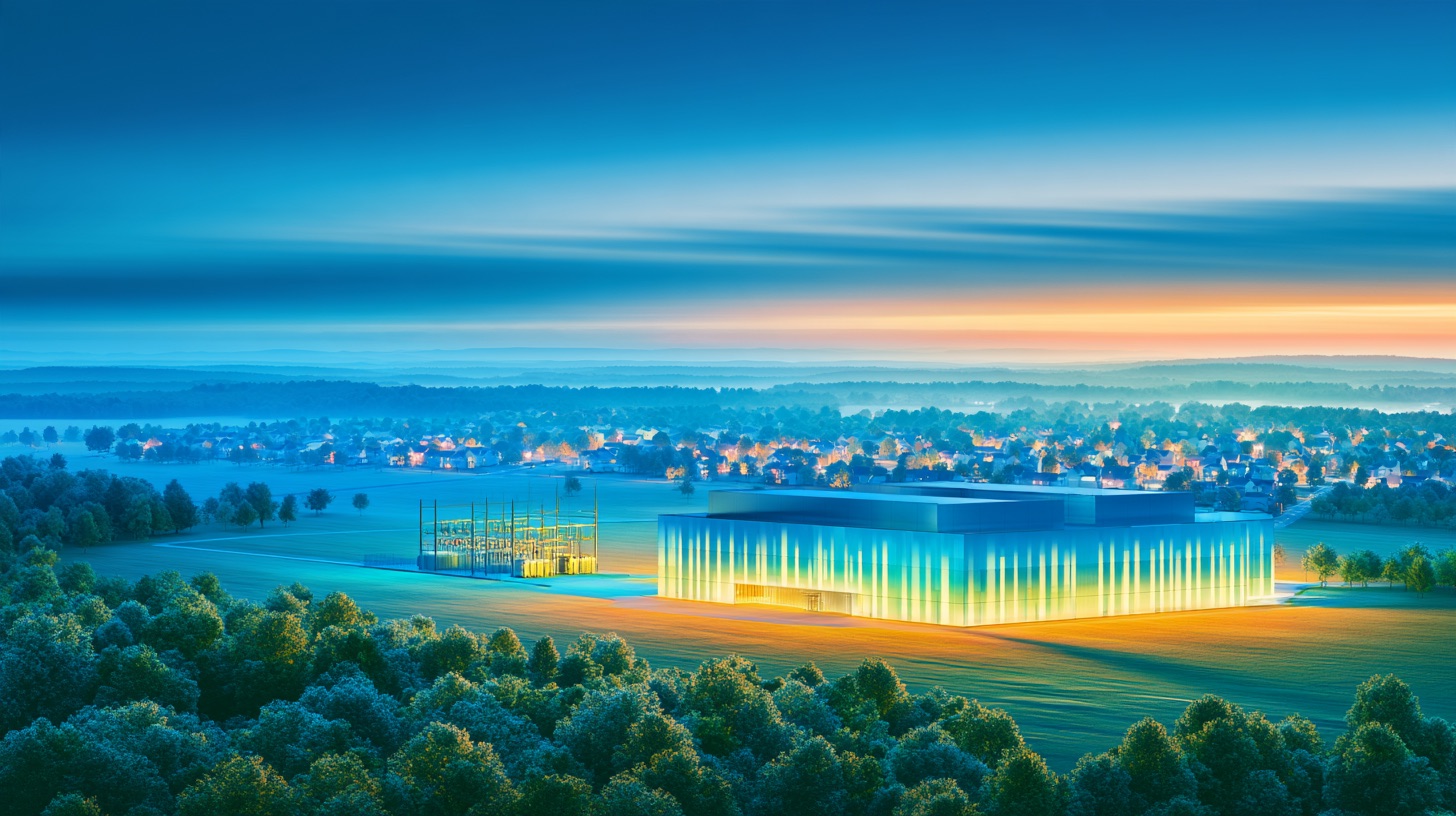
Financing for compute centers built to win local approval.
We help you plan a site that fits local rules and pays its own way on power, then bring it to capital partners who fund compute.
Communities are blocking large data center campuses. Sites that pay their own way still get built.
About 70% of Americans oppose an AI data center in their area, and contested projects now fail about half the time. Most new local bans target sites over 20 to 25 MW and leave room for sites below that line.
Projected global use in 2030, up from 415 TWh in 2024. The US accounts for almost half of the growth.
IEA, Energy and AI (2025)
Inference is moving to regional sites built where the power is. EPRI and Nvidia are piloting 5 to 20 MW sites at substations with spare capacity, and CBRE sees urban infill of 2 to 20 MW gaining momentum.
IEEE Spectrum on the EPRI pilots; CBRE, North America Data Center Trends H1 2026
The size line most new local bans draw. Standalone sites below it are usually left out of them.
Ordinances in Ohio, Kansas and New Jersey, 2026
What a community-ready site looks like
Local opposition is now one of the most common reasons data center projects stall. We help you meet these conditions before you go to the county, and they are what capital partners now look for.
Sources: Gallup, Heatmap, Dominion Energy and local ordinances, 2026.
| The site | Why it matters |
|---|---|
| Sized to substation headroom and local rules, typically 5 to 15 MW, and not split from a larger campus | Most new bans target sites over 20 to 25 MW, and splitting campuses invites tighter rules. |
| Uses verified spare capacity at an existing substation, with no new transmission lines | No new grid build that lands on local bills. Above 15 MW, only where the substation proves it. |
| Pays its own interconnection and grid upgrade costs upfront, and signs a contracted minimum demand with the utility | Virginia's large-load class starts at 25 MW. Below it, standard utility terms still allow both, so the site can choose to pay its own way. |
| Closed-loop or non-evaporative cooling | Keeps water off the list of objections. |
| Grid and storage, with disclosed backup at every site; fuel and runtime follow local permits | Compute needs firm backup, and towns accept it best when it is sized, permitted and disclosed. |
| Set back from homes, schools and parks, with noise limits | Distance triggers restrictions even for sites below the size line. |
| Public disclosure before rezoning or the first hearing | Secrecy turned land-use disputes into recalls in 2026. |
| No special tax abatement | Tax breaks with few permanent jobs drive recalls and repeal efforts. |
The largest data center market in the US, inside PJM where data center load now drives power bills. Loudoun, Prince William and Culpeper have moved data centers from by-right approval to public hearings, so every site we work on plans for that. It is also where we are already working with communities on resilience.
We are piloting a resilience evaluation layer, which turns this checklist into a scored record, and a resilience investment layer, so a site's benefit to the community can be assessed and financed alongside the power.
More ways to finance your growth
Fewer deals die before close when a site pays its own way and fits local rules.
Facilities sized to your next phase of growth, with room for a follow-on tranche once the first one performs.
Grid power at substation headroom, storage, and disclosed backup with fuel and runtime set by local permits, financed as its own project so your site adds nothing to local bills.

If you need power, finance it separately from the chips
The power side becomes its own project with you as the buyer. It is paid for over its own life, your raise stays with compute, and your site adds nothing to local bills.
- Infrastructure lenders
- Private credit
- Equipment lenders
- Grid at substation headroom, costs paid upfront
- Storage for load shaping and outages
- Disclosed backup, fuel and runtime per local permits
- GPUs and servers
- Customer contracts
- Your equity and venture debt
The power project signs the energy agreement with you. GPUs never enter the power project.
- Where you operate today, and where you want to add capacity
- Your load in MW and your timeline
- Chips on hand or ordered, and customer contracts
- How you finance today, and what it costs you
How it works
- 1Book a call
Thirty minutes with Zero Circle. There is no cost.
- 2Tell us what you are building
Your sites, customers, equipment and how you finance today.
- 3We map your options
Which capital partners fit, which structure suits you and what they will ask for.
- 4We make introductions
And we stay with you through to close.
Who it fits
- Inference and neocloud operators adding capacity
- Co-location tenants scaling into more space or their own sites
- Developers of standalone sites of 5 to 15 MW
- Operators with customers or chips lined up
- Hyperscale campuses
- Projects with no customers or equipment yet
Questions operators ask
- Do you lend the money?
- No. We work with 500+ capital partners and bring your project to the ones whose criteria fit.
- Can you lower my rate?
- We cannot promise a rate. A site that fits local rules is less likely to be blocked, and after the call we tell you what is realistic for your customers and structure.
- How do you get paid?
- A short retainer, and part of our fee depends on the close. We cover the details on the call.
- Have you closed a compute financing deal?
- Not yet. Zero Circle helps mid-market energy projects get to financing, and compute is new for us. You would be in the first group.
Tell us what you are building.
A 30-minute call on your sites, your customers and how you finance today. We follow up with the options that fit.
Or write to contact@zerocircle.eco.